Are There Bears in Lahemaa National Park?
Yes. Brown bears, lynx, moose and wild boar live in Lahemaa's forests, but they keep out of sight. What a day visitor sees instead, and tick advice.
Yes. Brown bears live in Lahemaa. The Environmental Board (Keskkonnaamet) lists them among the large mammals of the park’s big, unbroken forests, together with lynx, moose and wild boar, and Visit Estonia says the same. They keep out of sight, though. Nobody publishes the odds of meeting one, and no tour sold on this site goes looking for them.
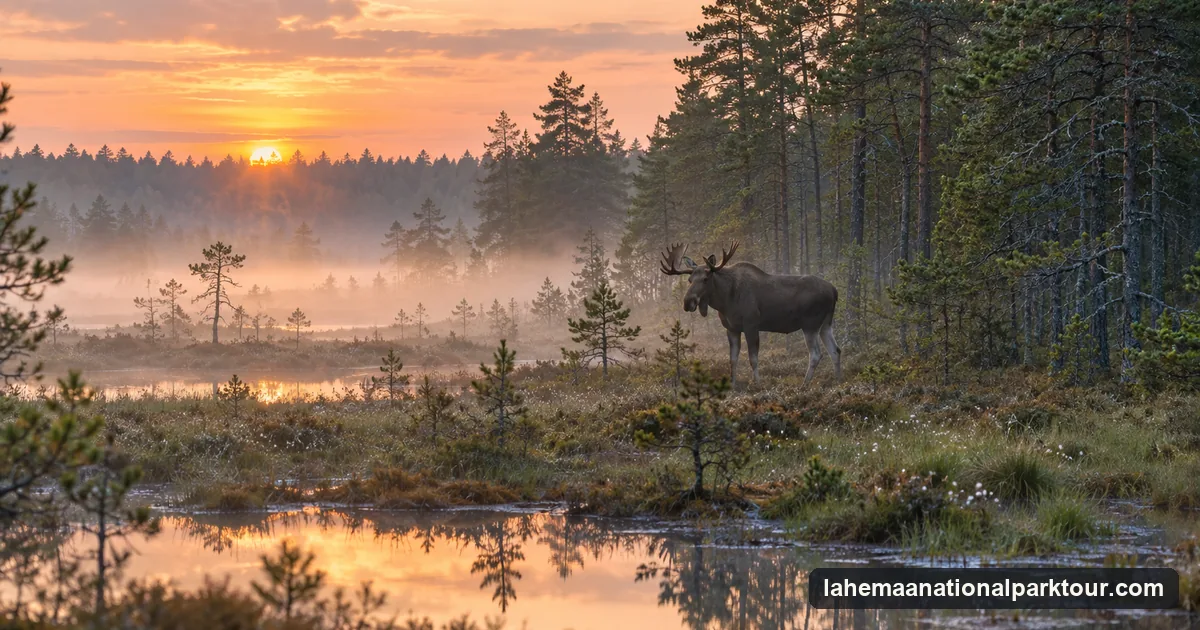
If a bear is the reason for your trip, look at Alutaguse National Park instead. Visit Estonia says it has Estonia’s highest bear population, and the country’s bear watching is done from hides there. Nothing of that kind is sold here.
What lives in the forests
The Environmental Board’s Lahemaa brochure describes large forests “untouched by human activity” as habitat for the brown bear, lynx, elk (the animal Americans call moose) and wild boar, and for rare birds such as the white-tailed eagle and the northern goshawk. We found no bear count for the park. For Estonia as a whole, ERR News reported in July 2025 that bear numbers are loosely estimated at over 1,100, a figure that doesn’t fully allow for animals counted twice.
A 2010 report in a local paper described a bear raiding a beekeeper’s hives in the Lahemaa area, and noted that bears may not be hunted in national parks at all.
Lynx are rarely seen. Moose are possible, though nobody gives odds for them either. Otters and American mink live in the park and usually go unseen.
What a day visitor sees
The real list is smaller and closer to the ground.
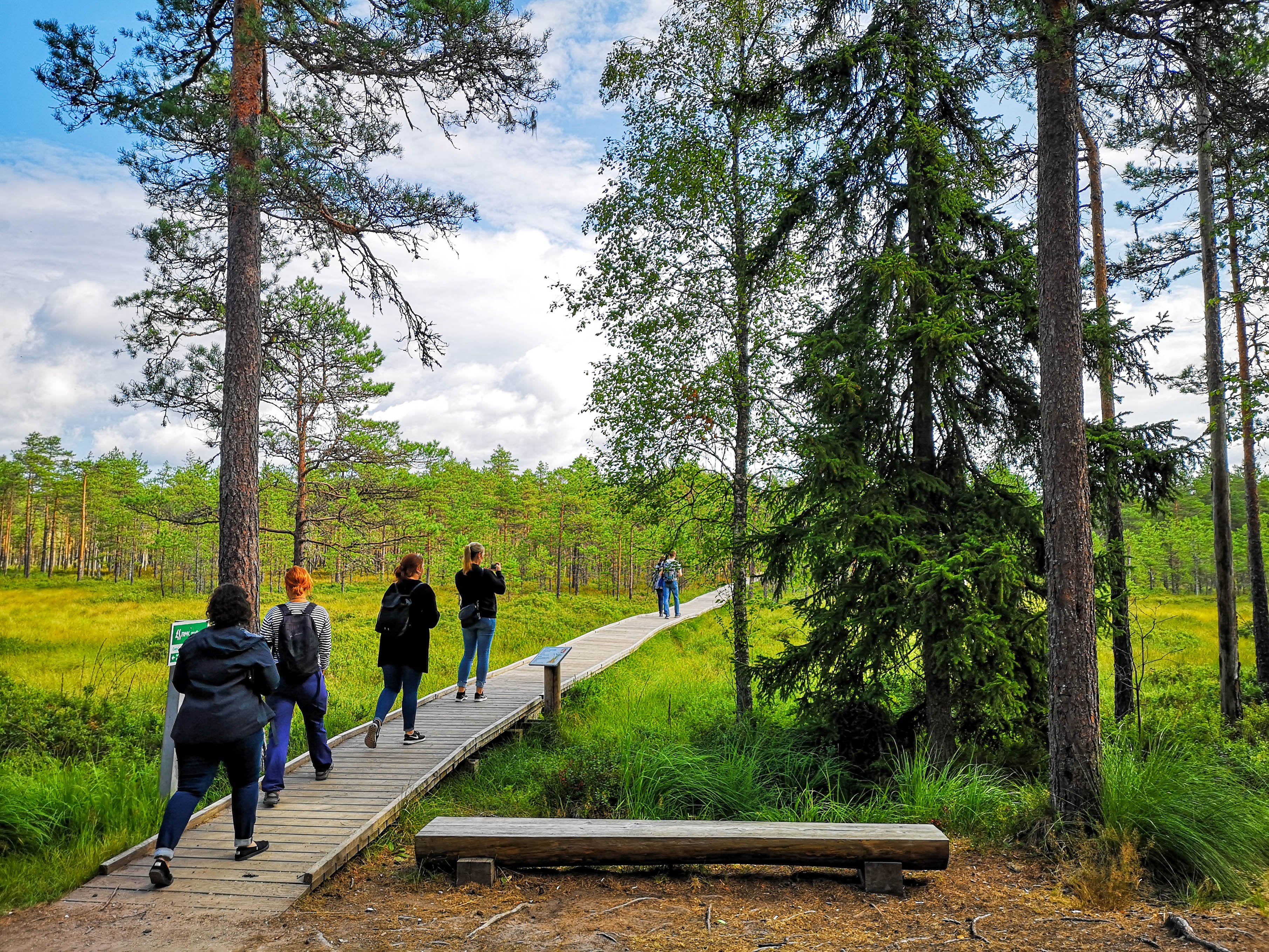
On the Viru bog boardwalk you pass the round-leaved sundew, which catches insects, along with cottongrass, crowberry and cloudberry, ripe as early as July. Cranberries follow in autumn.
Beavers leave more evidence than sightings. The Environmental Board says that on the 1 km beaver trail in the Altja River valley near Oandu you’ll easily spot dams, lodges and gnawed trees. None of the day trips lists that trail, so it’s one for drivers.
Then there are the cranes. The same brochure: “In autumn you can hear the calls of cranes as well as those of berry pickers – both have a weak spot for cranberries.” It adds that in the small hours thousands of cranes gather in shallow bays to spend the night. Grey seals come into river mouths and shallow bays in autumn too, and white-tailed eagles are occasionally seen hunting over the sea. In early spring you may hear capercaillie and black grouse calling, and Arctic waterfowl pass along the coast in spring and autumn.
One reviewer on Prangli Reisid OÜ’s full-day tour from Tallinn wrote about learning the trees, plants and herbs, and about eating a wild apple that grew on the coast. The tour has the longest record of the Lahemaa day trips, rated 4.9 from 922 reviews, and costs from about $134 on the booking platform when we checked. It is a day of nature and culture, with Jägala waterfall on the way, an hour and a half on Viru bog, a manor and a fishing village. It is not a wildlife tour.
When to go for birds and animal signs
Autumn has the most going on. Visit Estonia notes cooler days and fewer mosquitoes, and the Environmental Board’s brochure brings in the cranes, the cranberries and the seals. Birds that breed in the Arctic follow the Gulf of Finland coast twice a year, in spring (April–May) and autumn (September–October). Summer gives you the longest days and the most insects.
For birds and animal signs on a Lahemaa day, September and October are the months to pick.
Check dates for the full-day tour
Ticks and TBE
From May to October, Visit Estonia strongly recommends an insect repellent that works on both mosquitoes and ticks, with your legs and ankles covered and a hat on. ERR News reports that Estonia is an endemic area for tick-borne encephalitis (TBE) in the summer months. The Health Board’s advice, as ERR reports it, is to use repellent, check yourself several times, and wash your clothes when you come back from the forest.
The US Centers for Disease Control and Prevention (CDC) puts the main TBE season from April through November. It recommends the vaccine for travellers who will have extensive exposure to ticks; for everyone else, it is a decision to make with a clinician. If you’ll spend a lot of time in forests, ask your doctor about it.
Who should book something else
If seeing a bear matters more than seeing Lahemaa, plan a visit to a bear hide in Alutaguse. If birds are the point, Tallinn birdwatching covers Paljassaare, the migration windows and Matsalu. For the bog itself, read the Viru bog boardwalk guide, and for the whole day, is Lahemaa worth visiting. Every tour is compared on the homepage.
Wildlife facts from the Environmental Board’s Lahemaa brochure, Visit Estonia and ERR News; tick advice from Visit Estonia, ERR and the CDC; tours from the listings. Checked October 2026.
Book the Lahemaa Full-Day Tour
A whole day from Tallinn with Prangli Reisid OÜ: Jägala waterfall on the way, a guided walk on Viru bog, Sagadi or Palmse manor, and Altja or Käsmu on the coast. Rated 4.9/5 from 922 reviews, with free cancellation up to 24 hours before, and it runs year-round in all weather. Manor entry and lunch are not included.
Check Availability & Book