Birdwatching in Tallinn: Where to Go and When the Birds Pass
Paljassaare, on Tallinn's northern shore, has more than 220 recorded bird species. When to go, how far Matsalu is, the national bird, and a guided birding day.
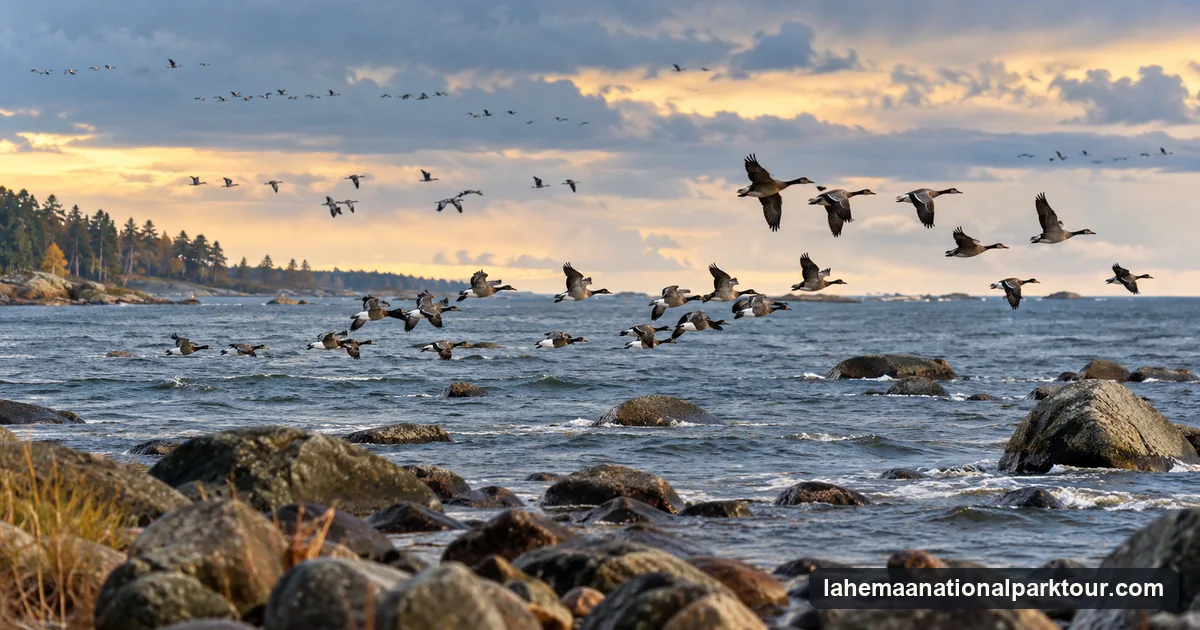
Start at Paljassaare. It is a conservation area on Tallinn’s northern shore, on a migration path, where more than 220 bird species have been recorded, and it has observation towers and a 550-metre boardwalk trail built for visitors. Go in spring (April–May) or autumn (September–October), when birds that breed in the Arctic follow the Gulf of Finland coast.
You can walk the boardwalk on your own. For a guided morning there, Tamme Travels sells a birdwatching and abseiling day: an hour and a half of birding at Paljassaare with a guide and a spotting scope, a picnic, then an afternoon abseiling at Astangu. It has no reviews yet, and it costs from about $169 on the booking platform when we checked. It stays in Tallinn; it isn’t a Lahemaa trip. Binoculars aren’t included, so bring your own.
Paljassaare, inside the city
Paljassaare hoiuala, as the listing calls it, is the Paljassaare conservation area. Visit Estonia counts it among Tallinn’s most valuable natural sites, an area of pan-European importance with views over reed beds, meadows and the sea, best from the observation towers. More than 220 species have been recorded there, and in summer highland cattle graze beside the trail.
On your own you get the boardwalk, the towers and whatever you can name. The guided version adds someone who knows the birds, and a spotting scope to look through.
When the birds pass through
Twice a year. The Environmental Board explains that the route of birds that breed in the Arctic and winter somewhere warmer runs along the Gulf of Finland coastline, so birds abound in spring and autumn. In Tallinn that means roughly April–May and September–October. Visit Estonia adds that the spring passage starts in March and dies down by mid-June. Nearly 400 bird species have been seen in Estonia, and more than 200 nest here every year.
An hour east: the Lahemaa coast
Lahemaa’s coast sits on the same route. The Environmental Board’s brochure describes Arctic waterfowl passing along it in spring and autumn, long-tailed ducks in the bays in winter, white-tailed eagles occasionally hunting over the sea, and thousands of cranes gathering in the shallow bays to spend the night in autumn. The 1 km Purekkari trail runs from a bird-watching area on the Mähu promontory to Cape Purekkari, the northernmost point of mainland Estonia. The Lahemaa day trips sold here are not birding tours, though; are there bears in Lahemaa? covers what a day visitor really sees.
Matsalu, Estonia’s big birding area
For a dedicated birding trip, the name is Matsalu. Visit Estonia calls the national park “arguably the best birdwatching spot in Estonia” and the country’s largest coastal wetland, with over 270 species, more than 100,000 barnacle geese stopping each spring, and a place on the Ramsar list of wetlands since 1976. The Environmental Board puts it on the East Atlantic Flyway: more than two million waterfowl pass over it each year, and more than 230,000 stop. Its towers include Haeska (10 m), Keemu (6 m) and Kloostri (16 m). The best times are April to mid-May and September to the end of October.
It is a separate trip. Matsalu lies in West Estonia, roughly 100 km south-west of Tallinn in a straight line and farther by road, and nowhere near Lahemaa. Nothing sold on this site goes there.
What is the national bird of Estonia?
The barn swallow, suitsupääsuke in Estonian. It was chosen from three candidates in November 1962, according to Eesti Loodus, the Estonian nature magazine.
Which European country is best for birdwatching?
No single country. Naturetrek, a British birding-tour company, spreads Europe’s best sites “from sunny Spain to chilly Finland”. Estonia’s case is its position on the East Atlantic Flyway, which Visit Estonia calls one of the world’s largest migratory routes: twice a year, Arctic birds stream along its coast.
The birdwatching and abseiling day
Tamme Travels collects you at Balti Jaama Turg, the Baltic Station market, and brings you back there. A 30-minute drive takes you to Paljassaare for 90 minutes of birding and a 45-minute picnic. Another 30 minutes takes you to Astangu, a former military base in the Haabersti district, for three hours of hiking and abseiling. The listing’s legs add up to about six and three-quarter hours.
The abseil is down a 15-metre cliff, with the equipment and on-site training included and tea and cookies afterwards. It is for ages 12 and up, and not suitable for children under 12, pregnant women or people with a low level of fitness; you should be comfortable with heights. Bring comfortable shoes, a long-sleeved shirt, long trousers and clothes for the weather. The guiding is in English or Estonian.
One thing to know before you book: the listing’s description promises a spotting scope and binoculars, but binoculars are on its exclusions and on its bring list. Take your own pair.
With no reviews yet, there is no track record to read. If what you want is a guided morning at Paljassaare with a scope, and an abseil after it, this is the trip.
For a day in the park itself, is Lahemaa worth visiting weighs it up and how to get to Lahemaa from Tallinn covers the road out. Every tour is compared on the homepage.
Birding facts from Visit Estonia, the Environmental Board, Eesti Loodus and Naturetrek; tour details from the listing. Checked October 2026.
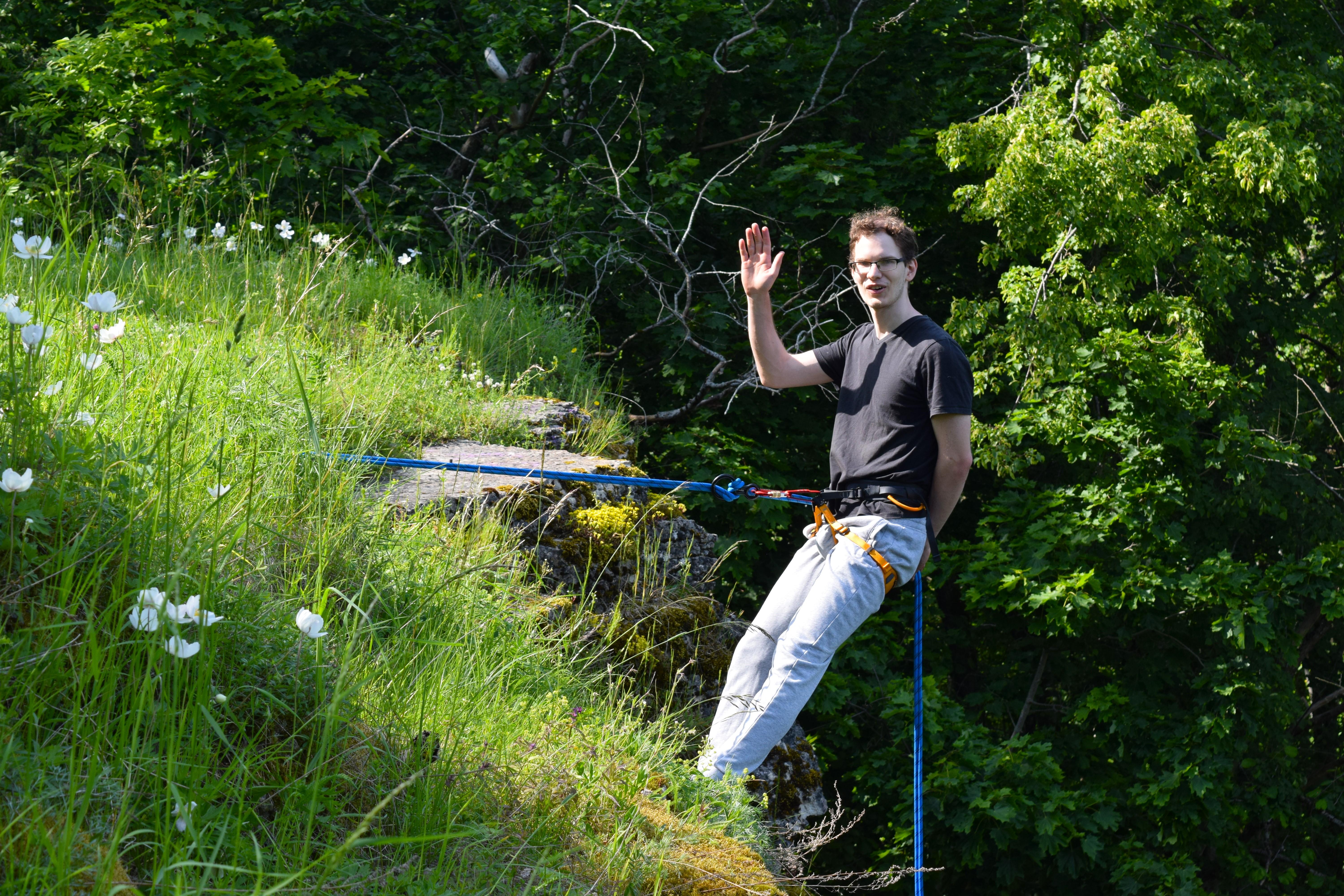
Book the Tallinn Birdwatching and Abseiling Day
A guided morning at Paljassaare with a spotting scope and a picnic, then an abseil down a 15-metre cliff at Astangu, with equipment and training. The listing has no reviews yet. Bring your own binoculars; abseiling is for ages 12 and up.
Check Availability & Book